Working with us
What happens after you say yes.
Every project runs the same six phases, whether it's one film or a series. Here's the shape of it, including the points where we'll need something from you, so you can plan your side of it properly.
- Proposal
- Onboarding
- Production
- Post-production
- Feedback
- Delivery
Proposal
We start with a conversation about the work itself: what it's for, who needs to see it and what would constitute a successful film. We'll have done our reading beforehand, so we arrive with intelligent questions.
Then you get a written proposal with three costed options, Essential, Standard and Added Value. They're alternatives rather than add-ons, so you can see what each level of ambition costs before committing to any of it.
To start, accept the estimate by email. Standard payment terms are 30 days, and if a deposit is needed it's on the estimate.
What we need from you: half an hour on a call, then a decision on which option fits the budget you have.
Onboarding
Once you've accepted, we write down what we've agreed. For a simple job that might only require an estimate. On a bigger one it's a separate brief or statement of work covering deliverables and dates, so nothing important is held in somebody's memory.
Then we build the script or shooting plan together. You bring what the work means and why it matters; we bring the storytelling and an outsider's sense of what will land with an audience. You sign it off before anyone books a camera.
After that it's logistics: crew, locations, contributors, permissions, parking. You get a call sheet a day or two before the shoot with the times, the addresses, who's needed when and our mobile numbers.
If the job requires considerable upfront expenses, we may have arranged to invoice for funds towards that now.
What we need from you: approval of the brief and script, introductions to whoever we're filming and a name for site access if the location is yours.
Production
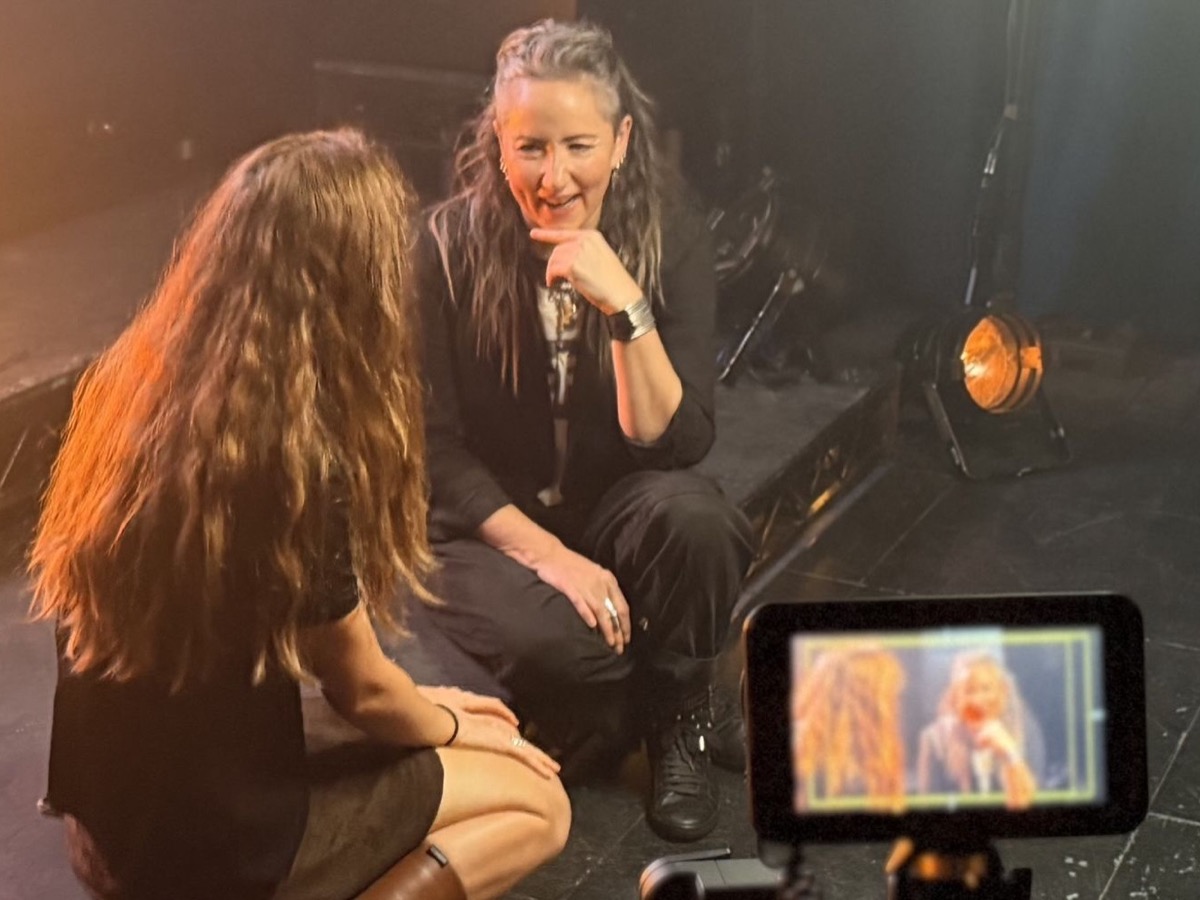
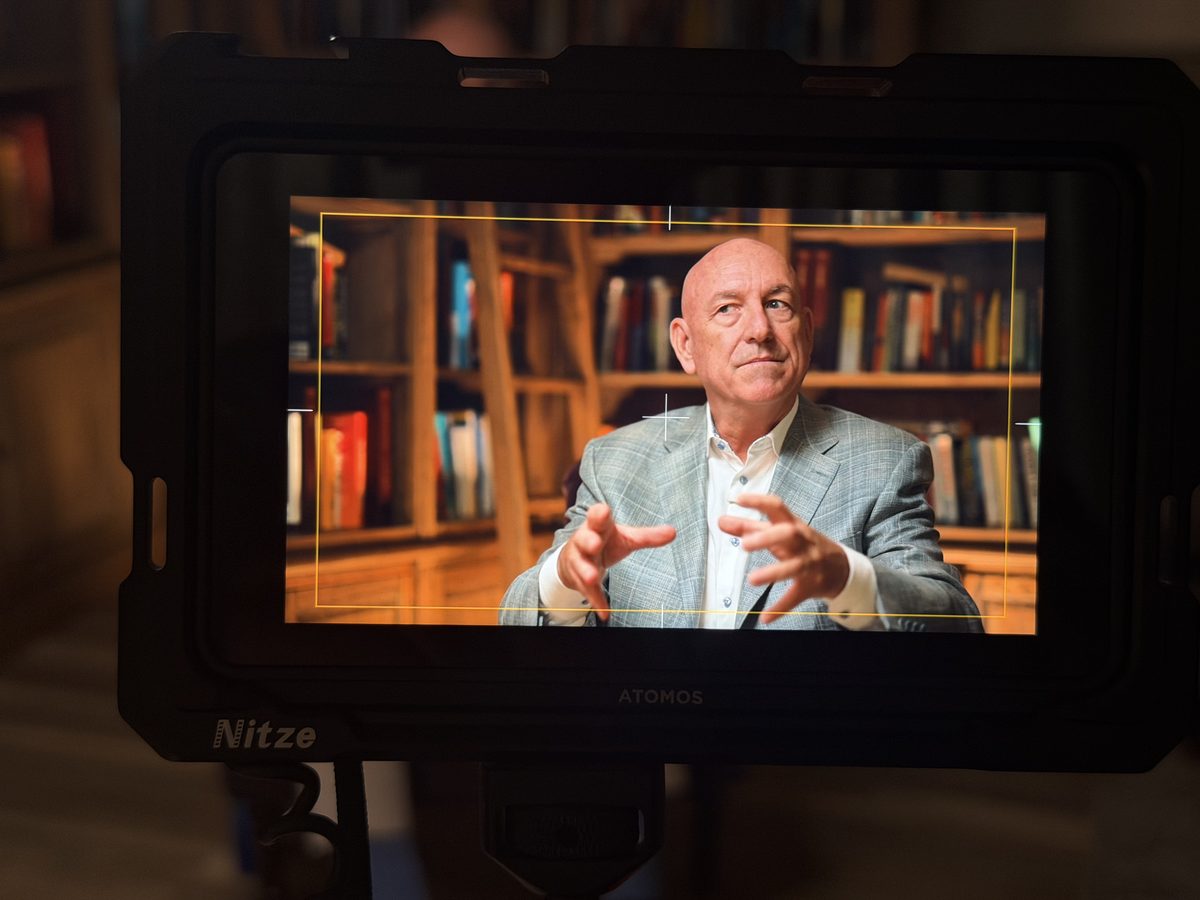
On the day, Carl often directs and conducts interviews, with Joe monitoring the cameras and audio. We have a pool of delightful and expert freelance crew, when a job needs more hands. We film it like a documentary, rather than a corporate video with a laboratory in the background.
Many people we film have never been in front of a camera before, and they tend to enjoy it more than they expect to. We keep the room small, we ask real questions, and we're in no hurry.
Things do change on a shoot day. A contributor is called away, a room turns out to be noisy, or the weather has other ideas. We respond with fresh options rather than a tantrum; after all, the audience never knows that there was once a different plan.
If the shoot used lots of crew or generated considerable expenses, we may have agreed an invoice stage here to cover that phase.
What we need from you: your contributors in the right place at the right time. The call sheet handles the rest.
Post-production
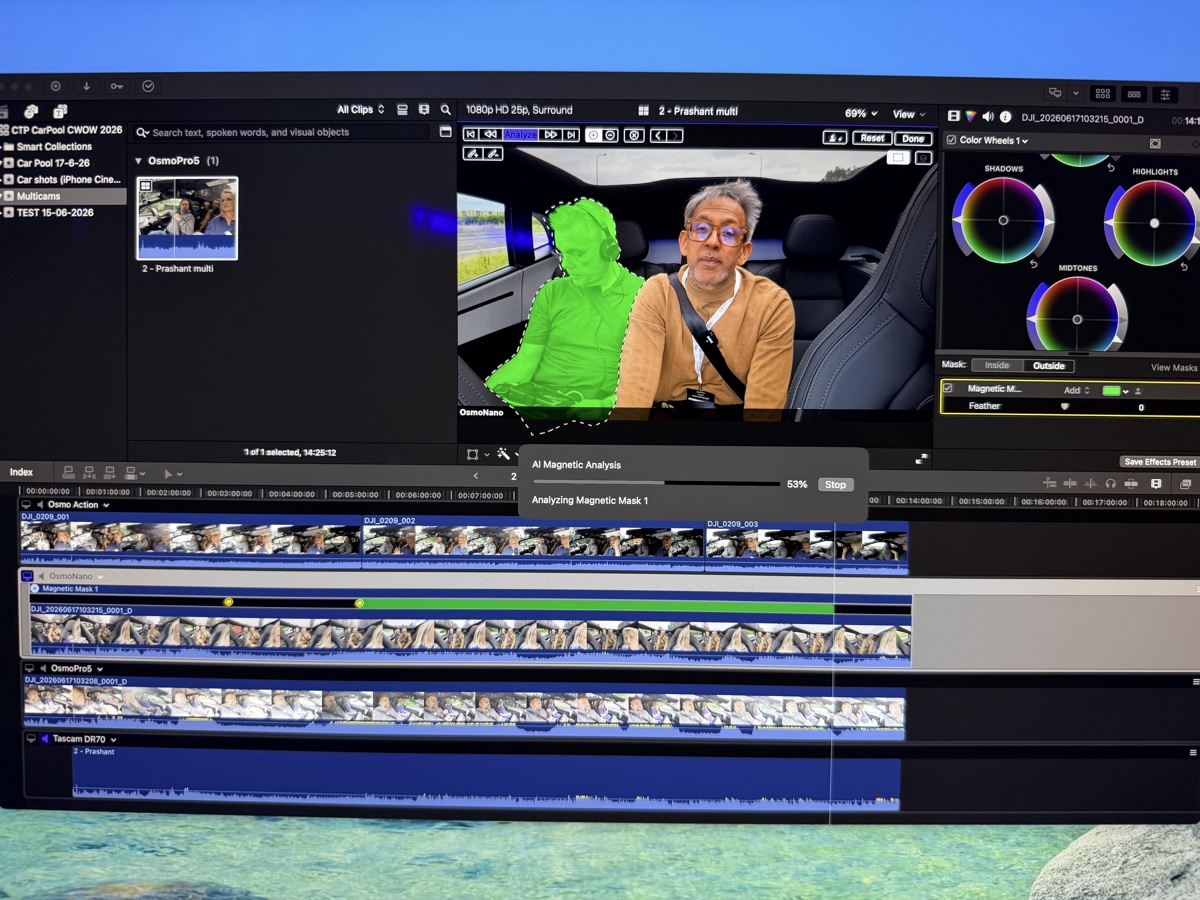
Joe edits. On some jobs we estimate a range of edit days rather than a fixed number, because weather, noise and unpredictable shoot conditions change how long a cut takes. In those cases we quote for the maximum and invoice only for the time used, so the number on the estimate is a ceiling and not a target.
If you want the interview transcripts for repurposing, say so and we'll send them. They're useful for pull quotes, captions, a blog post or a grant report, and they cost you nothing extra.
Stock media, if a film needs it, sometimes has to be charged on top. We'll tell you before we buy anything.
What we need from you: any logos, titles or brand guidelines, and the correct spelling of every name and job title. We'll look up what we can find ourselves.
Your feedback, on Vimeo
Each cut goes on a private Vimeo page. You comment straight onto the frame you're talking about, so instead of having to email about "the bit where the graph appears" your comment is tied to the exact frame you were watching when the thought occurred to you.
Everyone in your team comments in the same place. That matters more than it sounds: it means you're approving one document rather than reconciling four email threads, and when a stakeholder joins late they can read what's already been decided.
Estimates include two rounds of unlimited changes. This is so that we don't create a new edit after every few comments, render out and upload a new version and then see the next commenter leave contradictory notes that undo the hour we just spent! Best to get all the notes in, with everyone seeing their colleagues' thoughts, then implement them. Then we can iterate again for a perfect polish!
Anything past those two rounds is charged at £90 +VAT an hour, and we'll always say so before it applies.
What we need from you: your stakeholders' notes gathered up, so they reach us in one round.
Delivery
You get the final files in the formats you need, whether that's a master for the website, versions cut for social or a square and a vertical for the platforms that want them.
Copyright in the finished film transfers to you when the final invoice is paid. We keep the rushes for at least six months in case you want a change later, and for longer if you ask, at no charge.
We would love the option to use excerpts from our work in a showreel, to show potential clients what we do. If the material is confidential, tell us at the start of the project and we won't.
We will send the final invoice at this stage, payable in 30 days. Other terms are no problem, with prior arrangement.
What we need from you: let us know that you have everything you need, ask us for any extra help we can give and maybe send us a kind sentence about how you found working with us, if you're pleased you did!
Your project page
Knowing where things are.
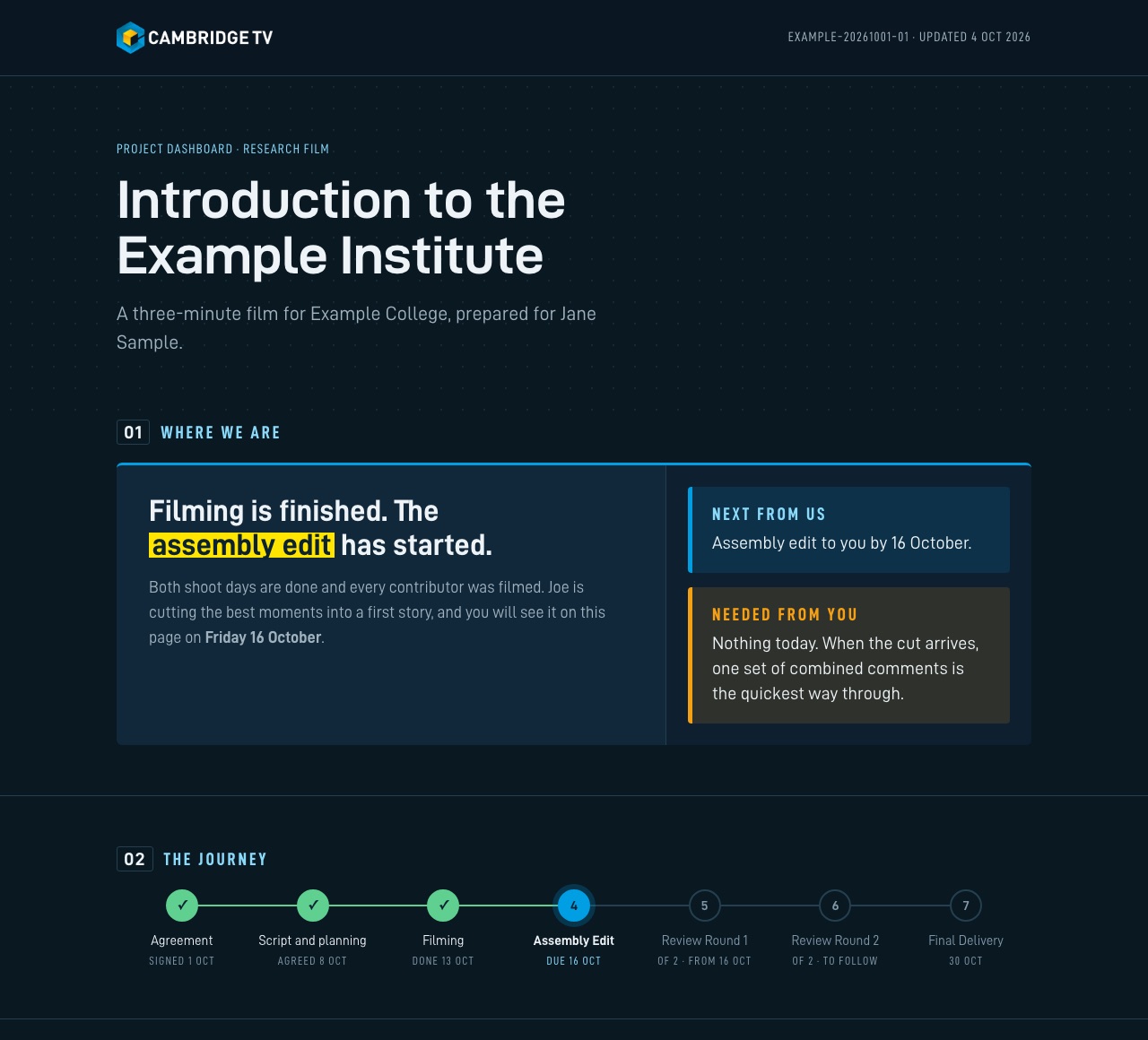
Every project gets a private page that shows which phase we're in, what comes next and what we need from you, so you don't have to email to ask. It lists your deliverables and key dates, shows how the edit is going and links to the Vimeo page where you watch and comment on each cut.
Add your email and we'll tell you whenever the page changes. Add your colleagues too, so everyone is looking at the same thing.
See an example page